
Transforming a desert landscape into a welcoming garden can seem challenging. Discover how to create a beautiful oasis that thrives in arid conditions.
Embrace the unique beauty of the desert with dramatic plants, bold colors, and natural elements. These 25 ideas will help you design a spectacular garden that is both resilient and visually captivating.
Layered Desert Garden With Varied Rock Sizes
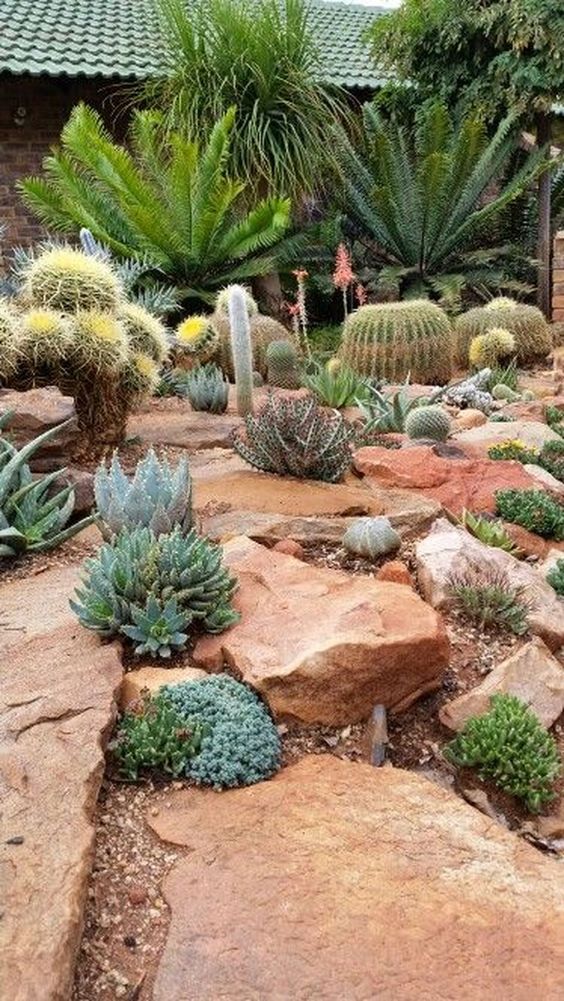
In a layered desert garden, varied rock sizes and textures create interest. Large, flat stones might form pathways or seating areas, while smaller, rougher rocks offer detail and distinction between plants.
This mimics natural formations and secures a stable base for succulents and cacti.
Design a Sculptural Cactus Border with Varying Heights
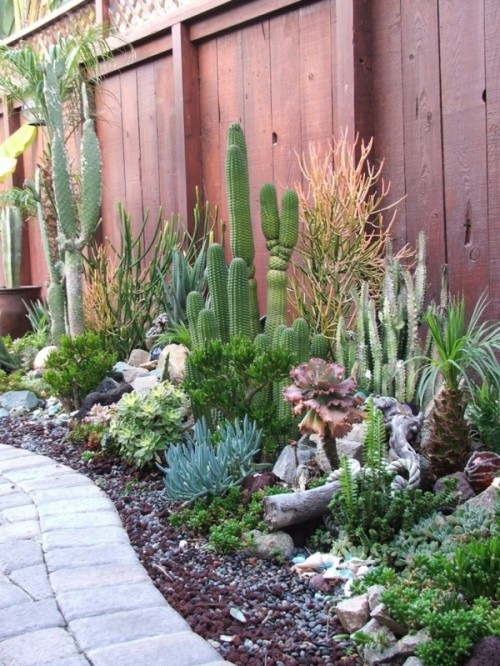
A border along a fence line can be formed by combining tall columnar cacti with lower-growing succulents and plants of contrasting textures. This mix of shapes and heights softens the hardscape of the garden bed.
Group Agaves for a Sculptural Ground Cover
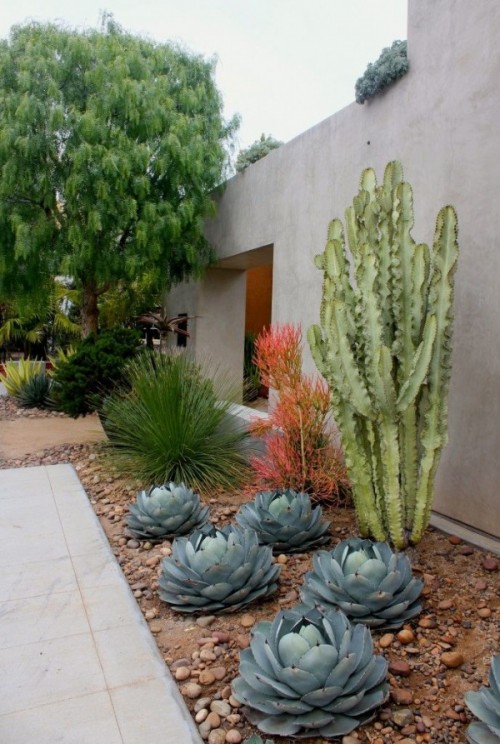
To form a striking, low-profile ground cover, cluster agave plants with their symmetrical rosette shapes. Nestled among rounded river stones, these succulents soften the hard lines of modern architecture.
Layer Succulent Beds with Contrasting Gravel

Dense, layered beds of succulents, interspersed with different types of gravel, show a range of colors. The cool blues and purples of larger succulents stand against the warm tones of the surrounding gravel and the dark, reddish volcanic rock.
Grouped Succulents Soften Pathway Edges

To soften the edge of a pathway or raised bed, cluster succulents with varied leaf shapes and colors. Soft, powdery purple Echeveria alongside larger, paddle-like green succulents provide a direct counterpoint to an angular concrete border.
Stacked Rock Fountain Adds Gentle Sound and Movement
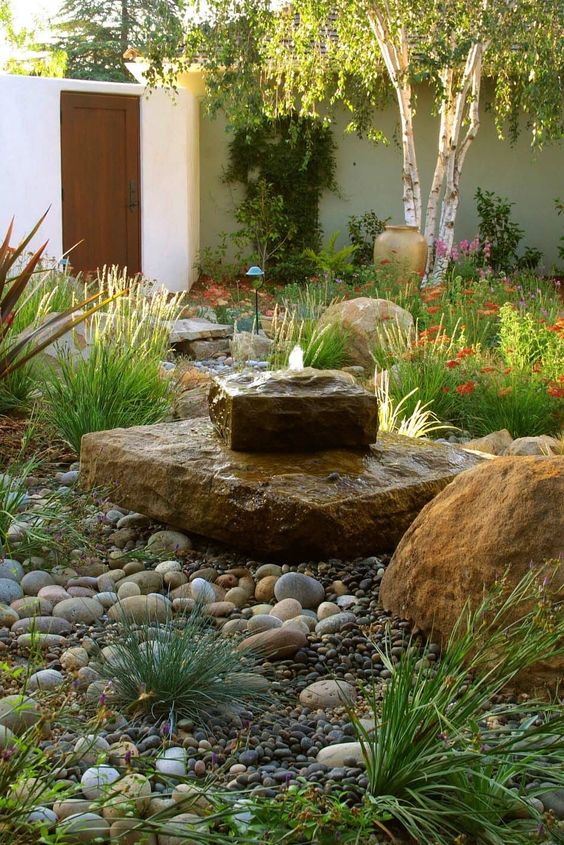
This small tiered fountain is built from stacked stones: a large, flat base rock topped with a smaller, rectangular stone. Water cascades down the sides, offering gentle sound and visual motion that adds a dynamic element to a dry landscape.
Terracotta Fountain With Water Flowing Over Edges

Water gently spills over the textured edges of a rustic terracotta fountain and into a lower basin. This central feature provides both auditory and visual motion, serving as a focal point among surrounding greenery, and its earthy tones complement the desert landscape.
Natural Stone Pillars Create Soothing Water Sounds
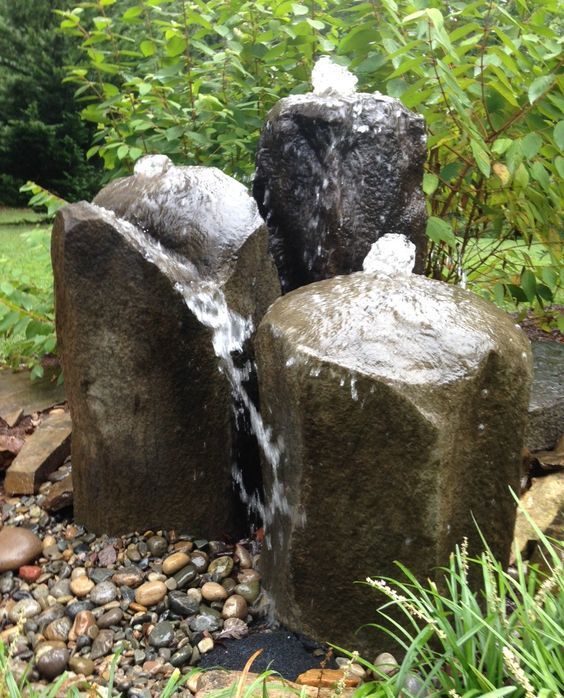
Water cascades down the rough surfaces of a cluster of dark, irregularly shaped natural stone pillars. The resulting soft, continuous babbling sound creates a soothing presence in a quiet garden corner, complementing the surrounding greenery.
Natural Stone Basin Fountain Creates a Gentle Water Feature

Water trickles from a small, stone basin fountain, carved from rock with a hollowed-out top. It cascades over the edges into a bed of river stones and mulch, bringing a soothing sound to the garden.
Agave Anchors a Water Feature with Architectural Form
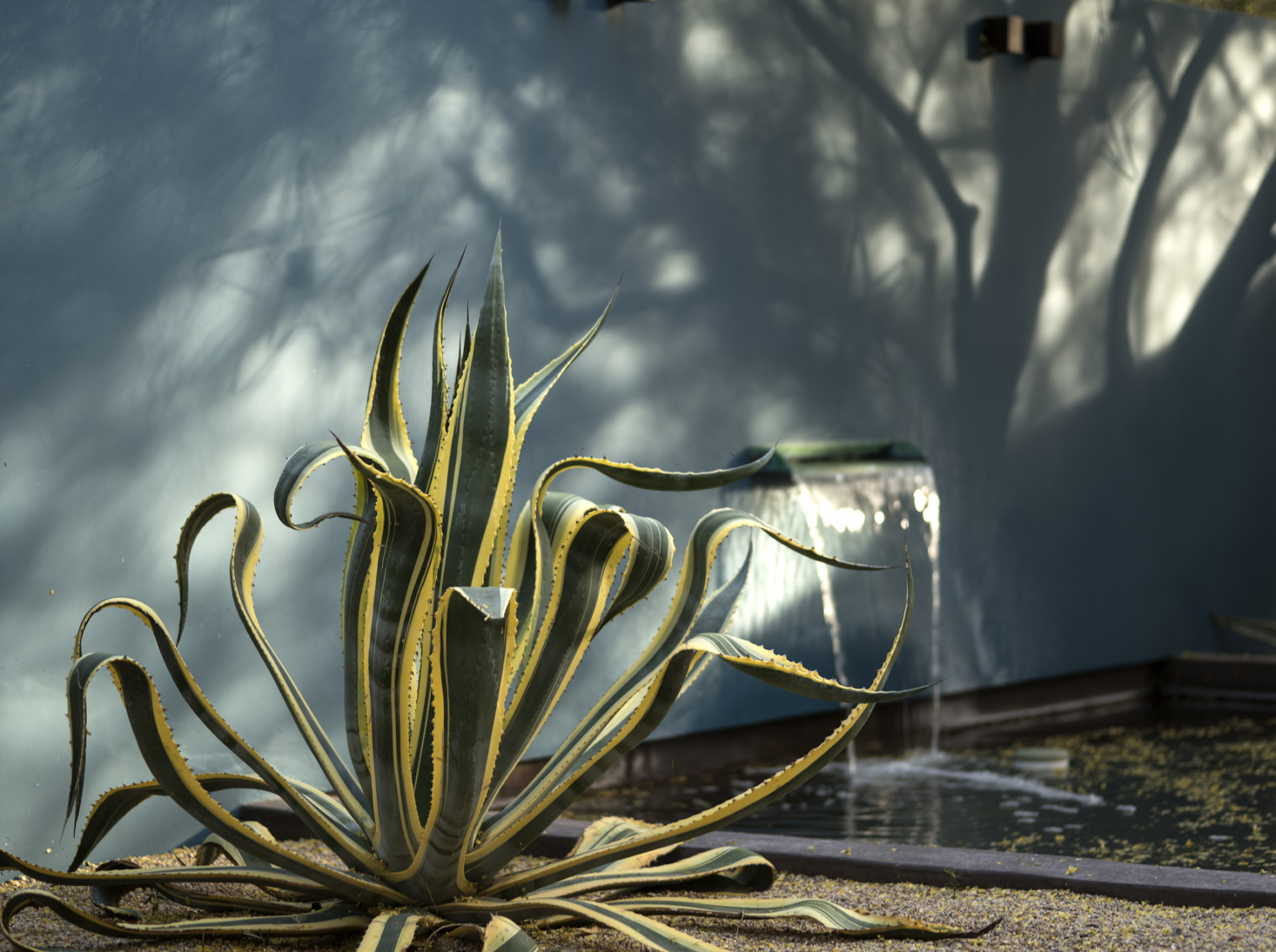
For a bold focal point near a water feature, use a striking agave plant with variegated leaves. Its architectural form and sharp lines stand in contrast to the soft movement and sound of the flowing water.
Group Barrel Cacti for Textured Ground Cover

Rounded barrel cacti, arranged in clusters, form a ground cover with varied sizes and spiky textures. This grouping adds a unique tactile element to the garden bed.
Purple Prickly Pear Adds Bold Color to Rock Gardens

Purple prickly pear cacti introduce a striking splash of color, their pads standing out against grey rocks and ornamental grasses. This plant offers a unique textural element and strong visual anchor, its intense hues creating a memorable focal point when paired with the natural tones of a desert landscape.
Tall Columnar Cacti Create a Dramatic Vertical Border

Tall, columnar cacti, arranged along the pool's edge, form a striking vertical line. These plants vary in height and thickness.
Large Opuntia Cacti Frame a Garden Entry

A large Opuntia cactus positioned near a wooden gate acts as an immediate focal point. Its broad pads and branching structure form a dramatic shape that softens the hard lines of the architecture.
Orange Adirondack Chairs Create a Cozy Seating Nook
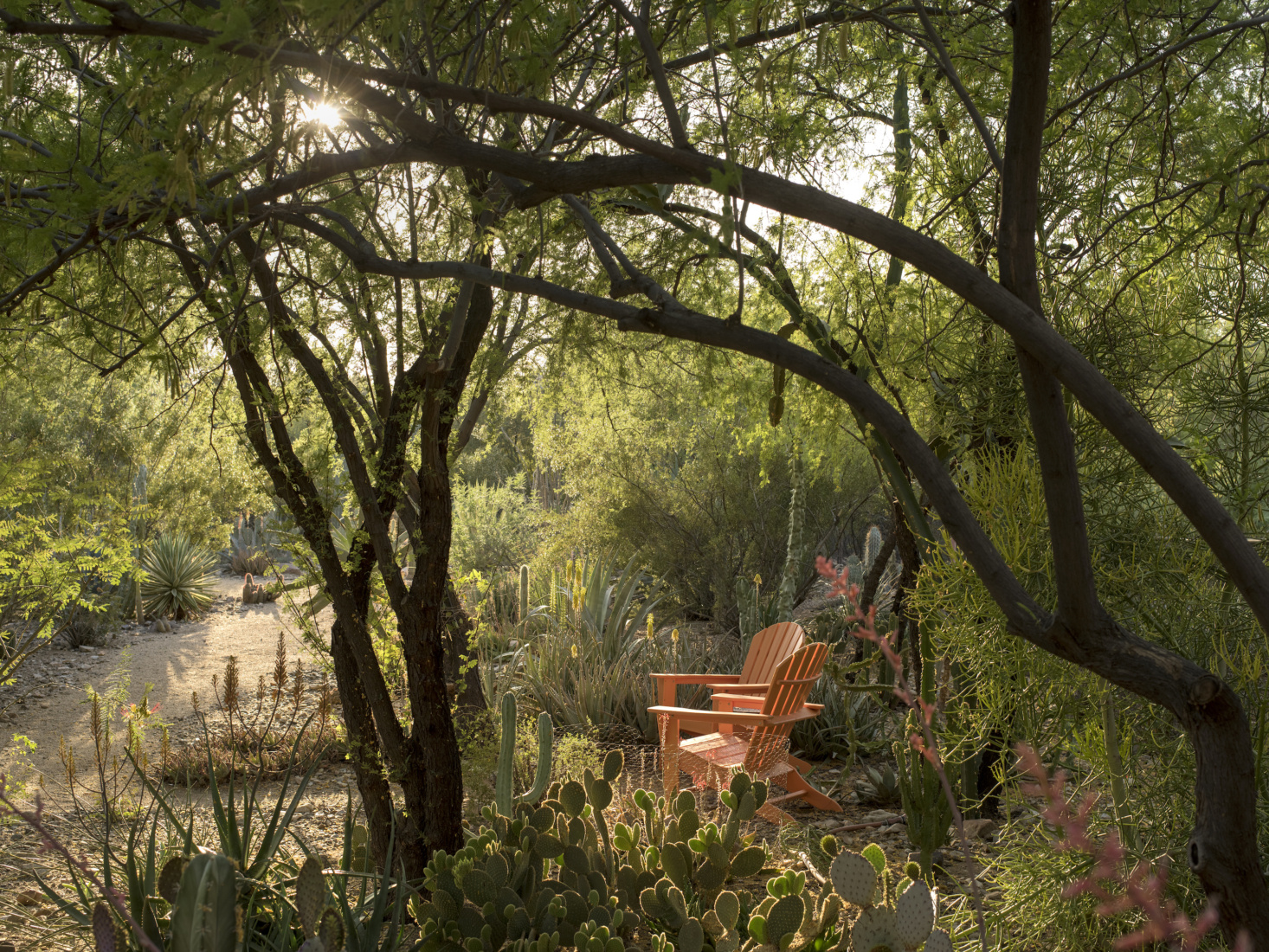
A pair of bright orange Adirondack chairs sits under the shade of mature trees, forming an inviting seating area. The chairs' warm color contrasts against the surrounding desert foliage, offering a spot to relax.
Group Barrel Cacti with a Single Large Bloom

Grouping barrel cacti in a rock garden shows their varied sizes and inherent texture. The delicate contrast comes from a single, large, pale pink flower blooming from one of the cacti, set against spiky forms and rough stones.
Tall Cacti Create a Striking Vertical Border

Tall, columnar cacti present a striking vertical line in the desert landscape. Their strong, upright forms offer a dramatic contrast to the rounded shapes of barrel cacti and the rosette structures of agaves in the garden bed.
Blue Agave Anchors Barrel Cacti Grouping

A striking blue agave plant makes a cool-toned focal point, nestled among a grouping of round barrel cacti. The arrangement adds a soft, sculptural element to the sandy landscape, contrasting with the sharp vertical lines of nearby columnar cacti and the clean architecture of the home.
Golden Barrels Add Round Contrast to Tall Cacti
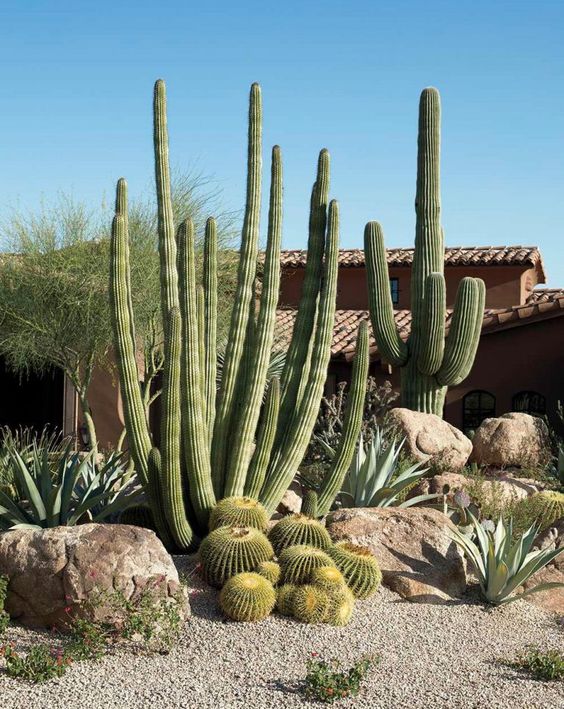
Several golden barrel cacti, grouped at the base of taller, columnar varieties, introduce a softer, rounded shape. Their bright yellow-green spheres offer a playful texture, contrasting with the vertical lines of the desert plants.
Layered Succulents Soften Stone Pathways
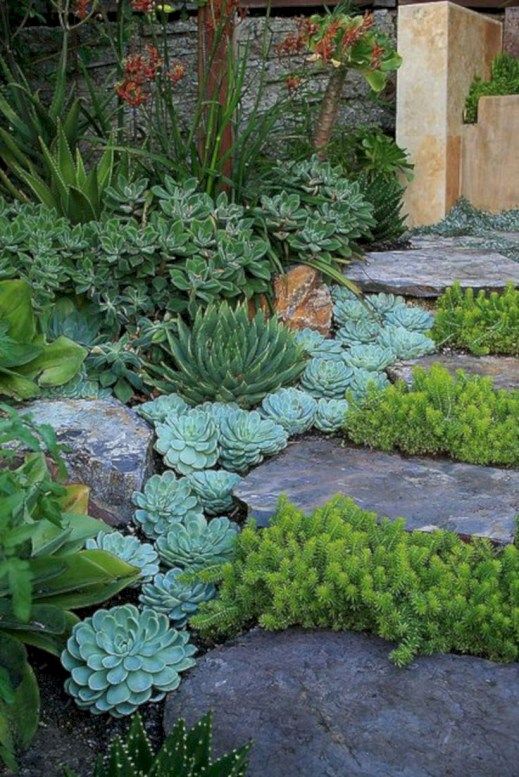
Arrange clusters of low-growing succulents, like Echeveria, along stone pathways for a soft, organic transition. Their rosette shapes fill the gaps between flagstones.
Layered Rock and Succulent Garden Creates a Textured Display

Layering succulents and rocks creates depth in a garden. Varying sizes of succulents, from a large agave in the back to smaller rosettes in the front, are interspersed with rough, multi-colored stones.
Low-Growing Succulents Soften Modern Pathways
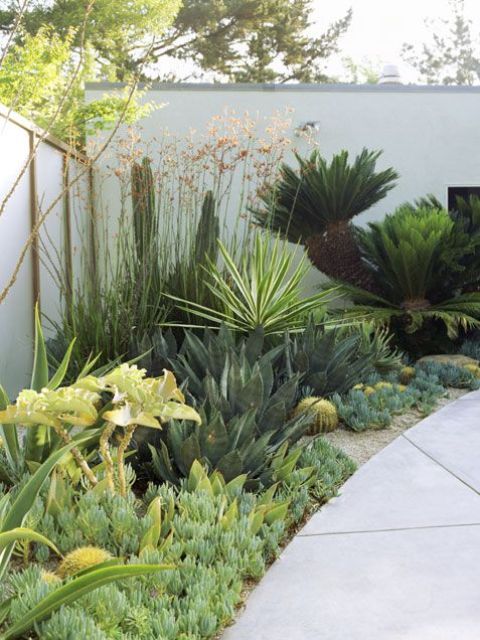
Along concrete paths, low-growing, mat-forming succulents spill over the edge of the gravel bed and gently meet the pathway. Their small, dense, rounded shapes and light green color offer a soft counterpoint to the paved area materials.
Tall Concrete Planters Define Garden Zones

Tall, rectangular concrete planters help define distinct sections within a garden. Their dark, smooth finish contrasts with the varied textures and colors of desert flora, framing focal points like agave plants or clusters of succulents.
Stacked Stone Planters Create Multi-Level Displays
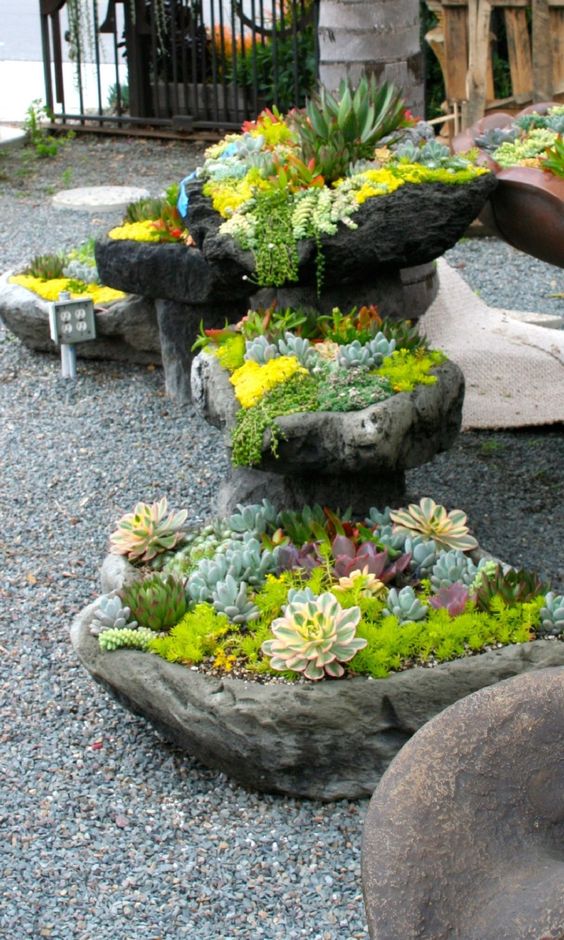
Unique, tiered stone planters mimic natural rock formations, providing different levels for succulents and groundcover plants. The varying levels accommodate a dynamic planting arrangement within the garden space.
