
Transform your outdoor spaces with stunning landscaping that conserves water. These smart ideas prove you don't need to sacrifice beauty for sustainability.
Discover practical and attractive ways to design your garden, from drought-tolerant plants to smart ground cover solutions, ensuring a yard with minimal watering.
Layer Drought-Tolerant Plants for Textured Garden Borders

Garden beds become more textured along a gravel path when you layer drought-tolerant plants. Fuzzy, blue-toned succulents pair with deep purple foliage plants and a pale green groundcover.
This mix brings varied colors and textures, and it conserves water.
Tall Bronze Jar Anchors a Drought-Tolerant Planting

A large, weathered bronze jar can stand in a layered garden bed. Architectural agave plants surround it, along with a dense groundcover of small, pale yellow flowers.
This low-water arrangement gives the planting a tall anchor.
Layer Succulents for a Textured Border Against a Concrete Wall

Against a smooth concrete wall, layer drought-tolerant succulents for a modern garden border. A large agave anchors the front, next to spiky foliage and a coral-hued pencil cactus.
Anchor Your Low-Water Design with a Textured Beige Jar
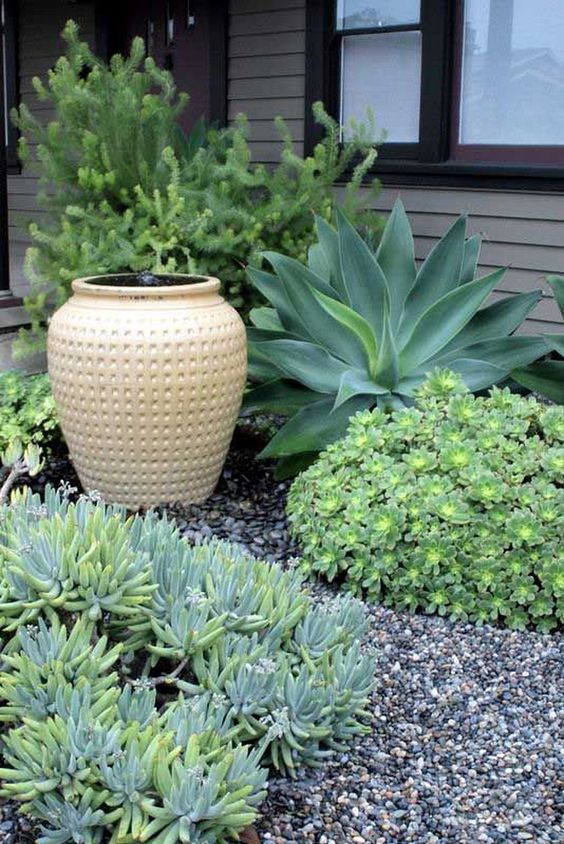
A large, textured beige jar can sit in the center of a low-water garden. Large agave and low-growing succulents surround it, all mulched with dark gravel.
The setup requires minimal watering.
Plant Succulent Groundcover Among Smooth River Stones
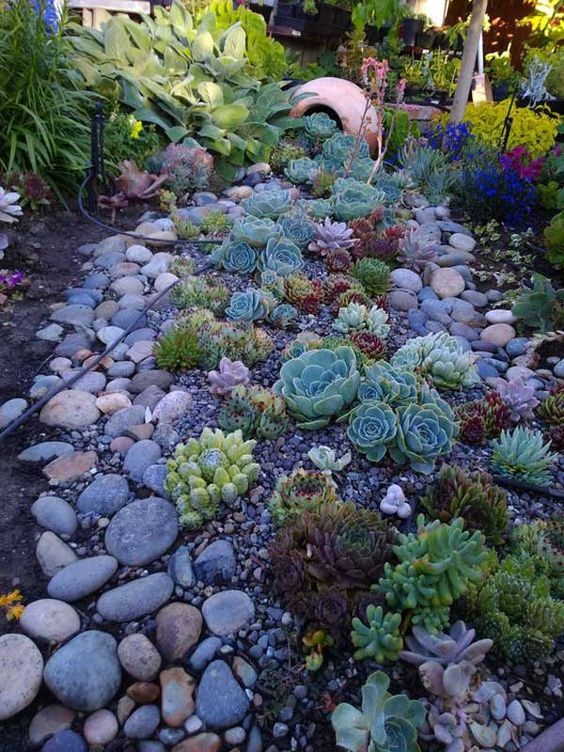
For a textured, low-water garden floor, plant numerous succulents directly into dark gravel. Smooth, rounded river stones in varying shades of grey and blue surround the plants.
These stones help retain moisture.
Design Dry Creek Bed Accents with Dark River Stones

For a dry creek bed without constant maintenance, fill it with dark, smooth river stones. Larger, natural rocks can border this feature.
Ornamental grasses and low-lying evergreen shrubs soften the edges in a low-water landscape.
Tip a Terracotta Pot to Create a Dry Creek Bed Spill

Tip a terracotta pot to let its contents spill out, creating a dry creek bed in the garden. Use a mix of small, smooth pebbles in white, grey, and black.
This stone path winds through drought-tolerant succulents and rocks, and the whole arrangement works in a low-water landscape.
Smooth River Stones Mimic a Dry Creek Bed
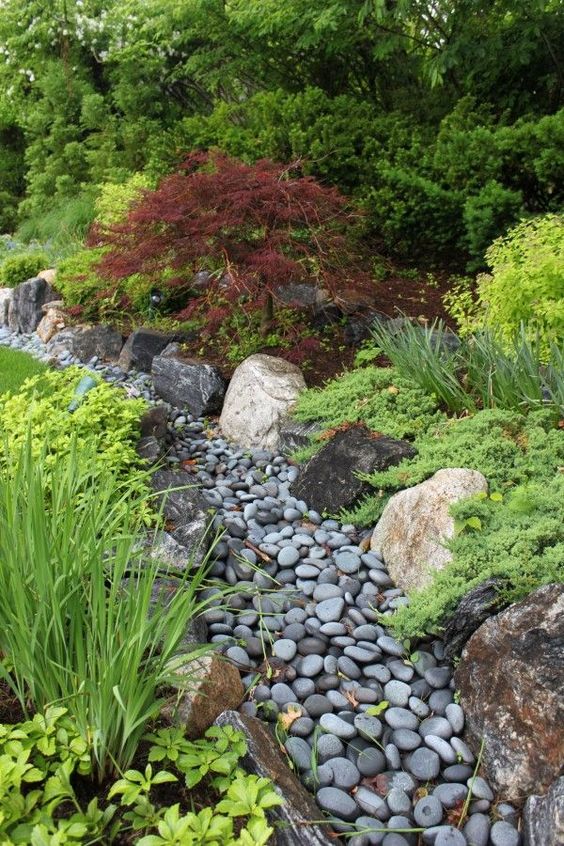
Lay down a winding path of dark, smooth river stones to form a dry creek bed. This feature sits against surrounding greenery and larger rocks.
It's a low-maintenance way to landscape.
Define a Winding Dry Creek Bed with Dark River Stones

Define a winding dry creek bed using smooth, dark river stones. Green groundcover and larger rocks border this path.
Line a River Rock Path with Clumping Grasses and Ferns
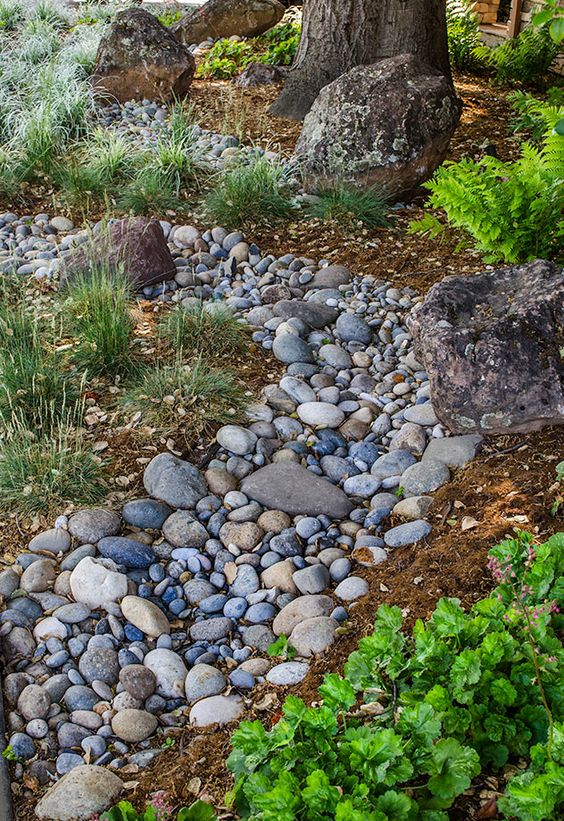
For a dry creek bed, line a path with smooth, rounded river rocks in varying shades of gray and blue. Along the edges, tuck clumping ornamental grasses and low-growing green foliage plants.
The arrangement conserves water.
Square Pavers Create Modern Stepping Stones Through Gravel Paths

Lay large, square concrete pavers through a gravel garden to form a modern pathway. These stones cut through soft, flowing grasses and spiky succulents.
The pavers provide a stable walking surface.
Tall Greenery Creates a Natural Screen Along Pathways
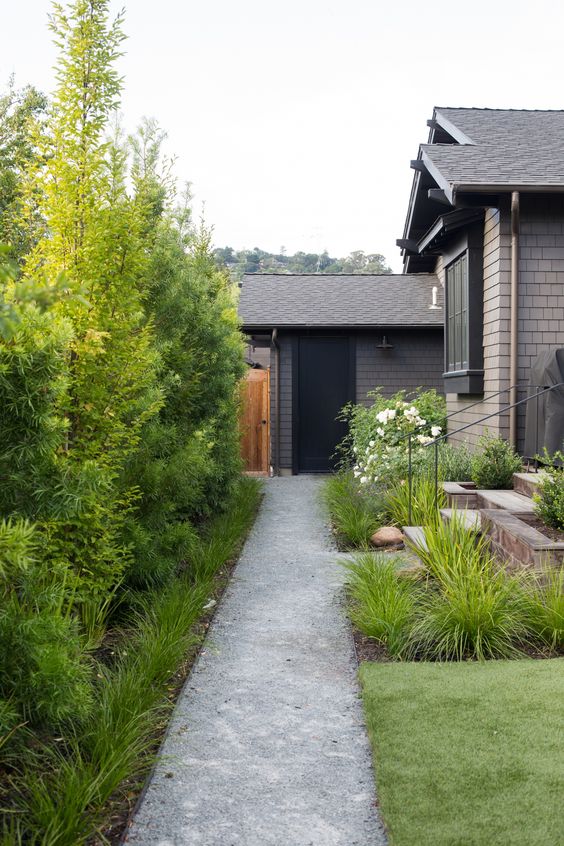
Line pathways with tall, slender plants for a sense of enclosure and privacy. This could be dense, upright evergreens or ornamental grasses.
They require minimal water and maintenance along a gravel path.
Decorative Metal Screen Adds Patterned Interest to Wall
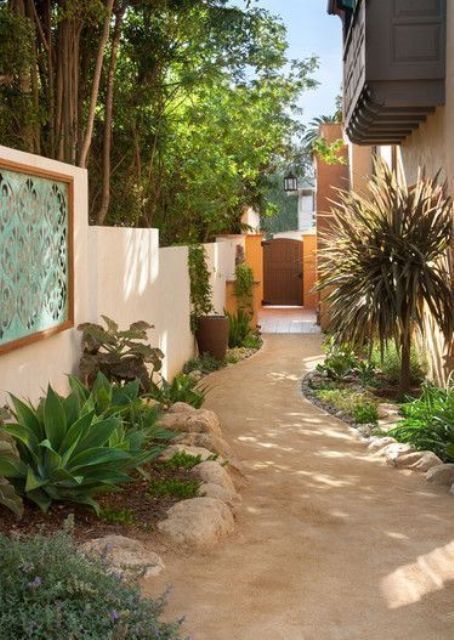
You can add a decorative metal screen with an ornate, patterned design to a plain wall. This turquoise metal panel, framed in wood, sits along a garden pathway.
Soften Tall Vertical Plants with Textured Foliage
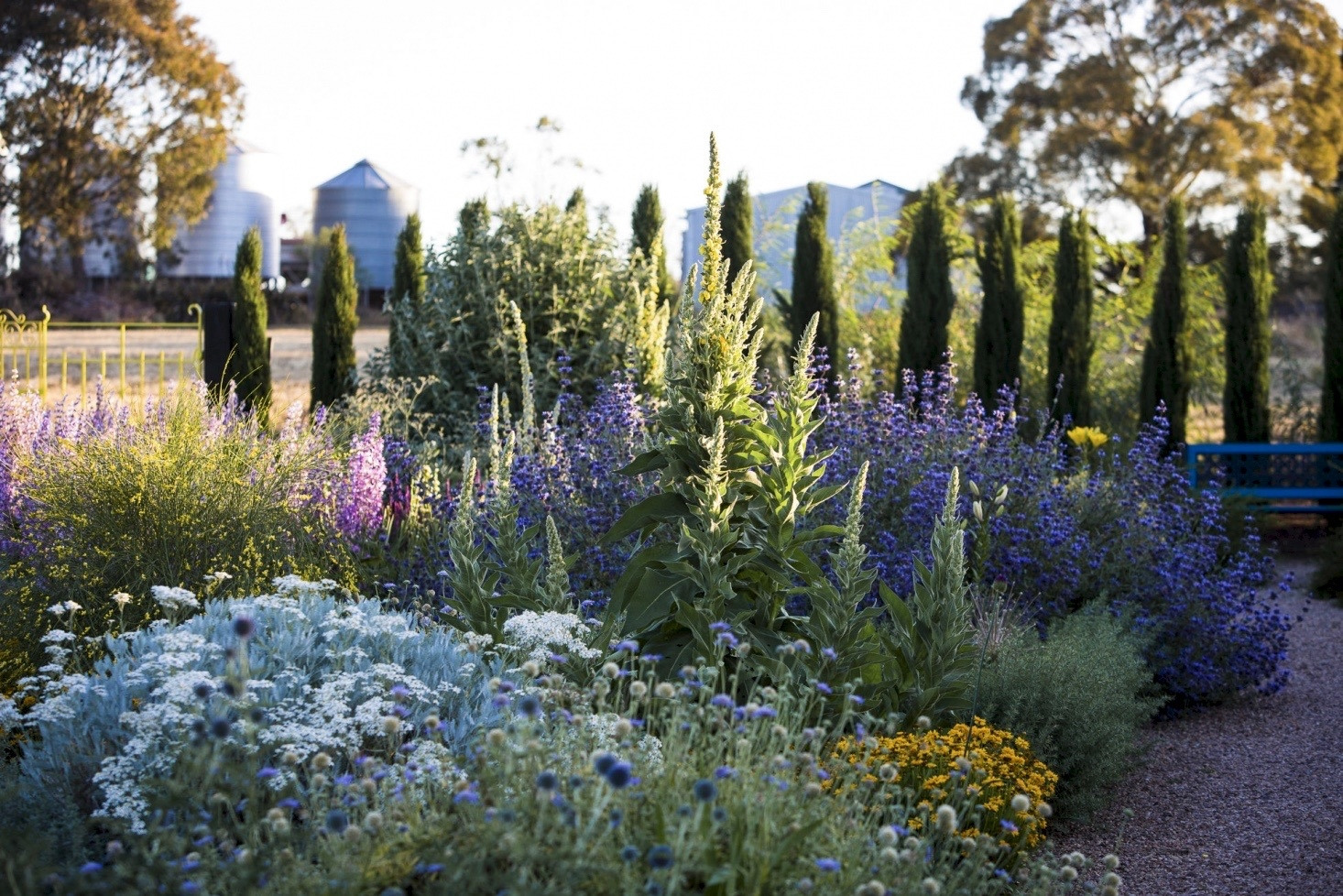
Layer plants with soft, silvery foliage in front of taller, upright greenery in your garden beds.
Terracotta Pot Showcases Tall Columnar Cacti
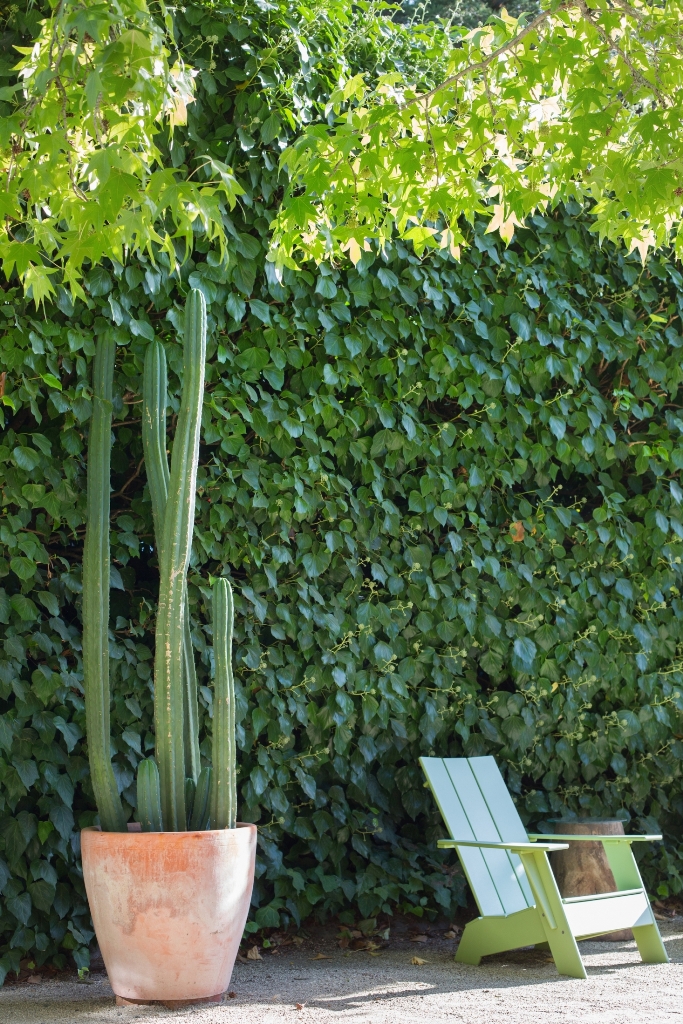
A large, unglazed terracotta pot can hold tall columnar cacti. The pot's warm tones sit against the cacti's cool green.
This pairing stands against a backdrop of dense ivy in the garden space.
Vertical Garden Box With Varied Greenery on Wooden Fence

Install a framed vertical garden box on a weathered wooden fence for a living wall feature. It holds a dense planting of succulents and grasses.
This works well in a small or overlooked outdoor area.
Group Tall White Cylindrical Planters for Visual Impact

Arrange tall, white cylindrical planters in varying heights throughout your garden. Grouping them this way sets them against a rustic wooden fence.
Group Succulents with Contrasting Textures in a Low Bowl Planter

In a wide, shallow concrete planter, group plants with varied textures and colors. A large, architectural agave sits at the center.
Dense, small-leaved succulents cascade around its base. This planter works well in outdoor seating areas or pathways.
Combine Clumping Grasses and Stones for Naturalistic Beds

Create naturalistic beds by interspersing mounds of fine-bladed ornamental grass with smooth, rounded river stones. This combination works in a low-water landscape, softening the edges of pathways and garden beds, and requiring minimal irrigation.
Form a Naturalistic Dry Creek Bed with Mixed Color River Stones
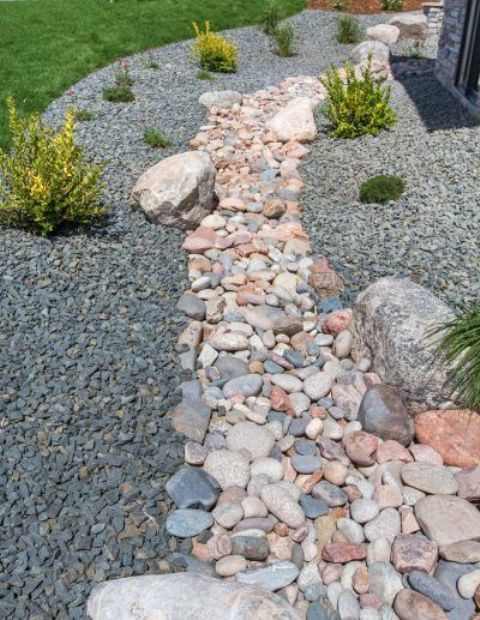
Form a winding dry creek bed from a variety of rounded river stones in shades of pink, grey, and tan. Border this stone arrangement with dark grey gravel.
Large boulders punctuate the landscape.
Anchor a Naturalistic Dry Creek Bed with Large Boulders

Anchor a dry creek bed with large, dark grey boulders. Inside, a mix of smaller, lighter stones fills the bed.
Plantings of ornamental grasses and low-growing pink flowers sit against the surrounding dark mulch.
Natural Stone Creek Bed With Contrasting Greenery
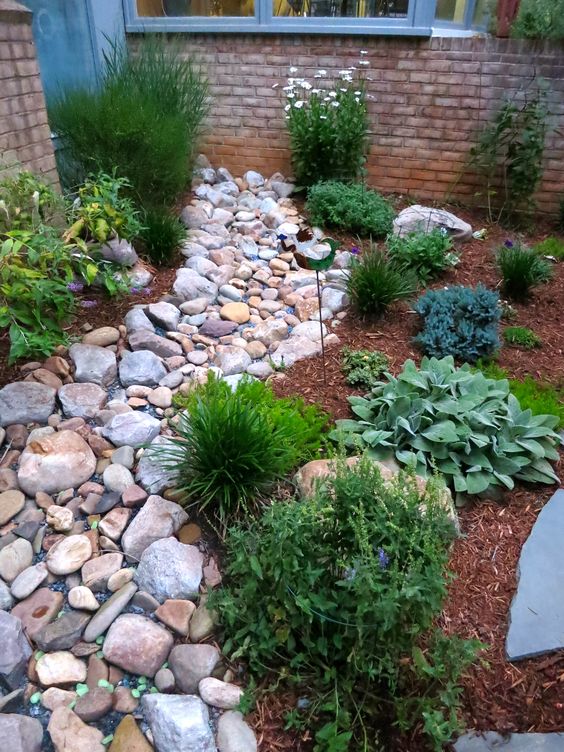
Build a dry creek bed using a mix of natural stones in various sizes and colors. Border this stony path with low-water plants like ornamental grasses, lamb's ear, and low-growing evergreens.
The grouping conserves water.
Irregular Stone Pavers Create Naturalistic Garden Paths
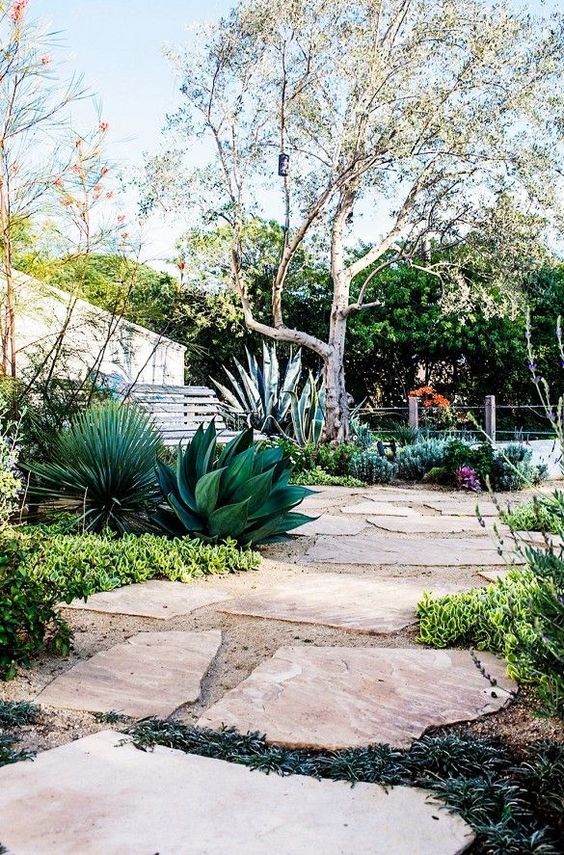
For a meandering garden path, lay down irregular stone pavers. These pavers come in varied shapes and sizes, allowing low-growing groundcover to spill between the stones.
Natural Stone Pavers Create Organic Pathways Through Mulch

Lay down irregular, flat stone pavers to form a path through garden beds. These shapes offer a stable walking surface through mulch.
The stones' varied earthy tones sit against the surrounding greenery and bark chips.
